Tarski's Theory of Truth
Defines coherent, unambiguous semantics by formally relating the subjects being modeled to the concepts that represent them.

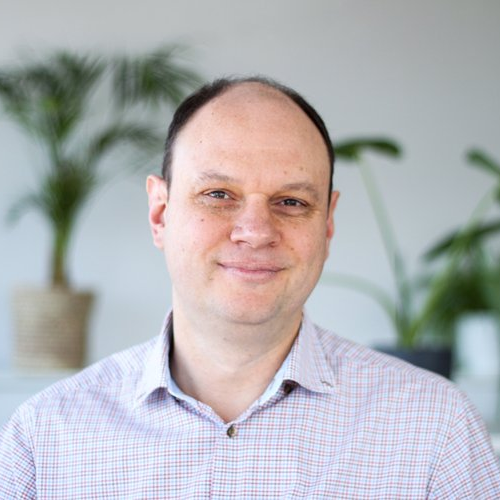
Hello!
I am Andrey Naumenko. This website presents the Triune Continuum Enterprise, my independent research project that was mostly active in the first decade of the 21st century. In particular, it presents the Triune Continuum Paradigm, a general systems modeling paradigm based on Tarski's theory of truth, Russell's theory of types, and the theory of the Triune Continuum. The paradigm was publically presented for the first time on the 21st of June 2002 as the result of my Ph.D. research at EPFL.
Triune Continuum Enterprise promotes rigorous, philosophically-grounded theory — for system modeling in software engineering, enterprise architecture, and information systems — into concrete practice.
To carry the theoretical foundations of systems analysis from published research into the practice of Information Systems development.
This mission is pursued by publishing original research on the foundations of system modeling and their applications; by teaching and lecturing on these foundations; and by grounding applied consulting work in a theoretically justified basis rather than convention alone.
A paradigm for general system modeling, defined in a 2002 EPFL doctoral thesis and built on three principles drawn from formal logic and philosophy.
Each principle answers a distinct requirement of a rigorous modeling framework: unambiguous semantics, internally consistent structure, and a justified minimal set of foundational concepts.
Defines coherent, unambiguous semantics by formally relating the subjects being modeled to the concepts that represent them.
Categorizes a framework's concepts so applications form internally consistent structures of propositions, free of paradox.
Justifies the minimal set of modeling concepts necessary and sufficient to cover general system modeling at its most abstract level.
Applied to formalize the conceptual framework of RM-ODP (the ISO/ITU-T standard for system modeling) and to construct an alternative, internally consistent metamodel for UML. Full technical detail is in the doctoral dissertation and the papers listed below.
The paradigm's namesake theory: an account of the continuums necessary and sufficient to cover the scope of general system modeling.
Defined in the same 2002 EPFL doctoral thesis, the theory of Triune Continuum introduces three continuums that together represent the scope of general system modeling. The spatiotemporal continuum is where subjective space-time metrics are defined; the constitution continuum is where subjective constitutional metrics are defined — for instance, objects described in relation to their environments. The two are introduced as strict complements: everything in scope that is not space-time is constitution, and everything that is not constitution is space-time.
From the relation between these two necessarily emerges a third: the information continuum, which holds information about how the first two relate — for example, information about objects and their environments as related to spatiotemporal intervals or points in space-time.
The three are triune in the strict sense: none exists without the other two. The instant a spatiotemporal continuum is introduced, everything outside it forms the constitution continuum, and information about their mutual relation emerges as the third. This gives diverse modeling frameworks — from jurisprudence and healthcare to software engineering — a way to justify a minimal set of concepts that is both necessary and sufficient for their representation scope.
The logotype is not decorative — its every element encodes the theory it represents.
The three smaller circles positioned within the larger one stand for the three continuums. The black and white circles represent the spatiotemporal and constitution continuums, introduced as complements — which is why each makes visual sense only against its opposite background: the white circle reads against black, the black circle against white. The third circle, the Taoist yin-yang symbol, stands for the information continuum: the continuum that holds information about how the first two relate.
The yin-yang is a deliberate tribute — the same idea is generalized in Taoist philosophy's principal text, the Tao Te Ching, attributed to Lao Tzu (604–531 BC):
The Tao begot one.
One begot two.
Two begot three.
And three begot the ten thousand things. Lao Tzu, Tao Te Ching, Chapter 42
Read against the theory: the Tao begetting one stands for a universal scope that allows for modeling at all. One begetting two stands for modeling intrinsically assuming two essences — space-time and constitution. Two begetting three stands for the information about their mutual relation that necessarily emerges from the first two. And three begetting the ten thousand things stands for the unlimited richness of that information.
That unlimited richness is also why the background is a full spectral gradient: the spectrum's unbroken continuum of nuances symbolizes the unlimited richness of information the three continuums can represent together.
Selected milestones
Invited to the Programme Committee of the 6th International Workshop on Business/IT Alignment and Interoperability, London.
An article on the Triune Continuum Paradigm published on Wikipedia; expert review contribution to a Cambridge University Press special issue on Ontology, Conceptualization and Epistemology for Software and System Engineering of the Knowledge Engineering Review journal.
Invited to the Programme Committee of the 4th International Workshop on Vocabularies, Ontologies and Rules for The Enterprise, Munich (Germany); expert review contribution to an Elsevier special issue on Vocabularies, Ontologies and Rules for Enterprise and Business Process Modeling and Management of the Information Systems journal.
Invited to the Programme Committee of the 3rd International Workshop on Vocabularies, Ontologies and Rules for The Enterprise, Annapolis (USA), as well as the Programme Committee of the 2nd International Workshop on Ontology, Conceptualization and Epistemology for Software and System Engineering, Milan (Italy)
Invited to the Programme Committee of the 2nd International Workshop on Philosophical Foundations of Information Systems Engineering, Luxemburg.
Invited to the Programme Committee of the International Workshop on Vocabularies, Ontologies and Rules for The Enterprise, Enschede (Netherlands); expert review contribution to a Springer special issue on Coordinated Development of Business Processes and their Support Systems of the Requirements Engineering Journal.
Invited by the Swiss Association for Standardization (SNV) to represent Switzerland on the ISO/ITU-T Software and Systems Engineering committee.
Taught a two-semester course for first-year BSc students at the EPFL School of Computer and Communication Sciences.
Biography included in Who's Who in Science and Engineering, Who's Who of Emerging Leaders, Who's Who in the World.
Public defense of the Ph.D. thesis defining the Triune Continuum Paradigm, 21 June 2002.
Get in touch.
For collaboration, consulting, speaking invitations, or general inquiries.